I recently attended GEO Business 2026, where AI dominated many of the conversations. Beyond the hype, three themes stood out to me.
AI Is Only as Good as the Data Behind It
One key message from GEO Business 2026 wasn’t about new tools. It was about trusted data. As AI makes geospatial analysis accessible to non-specialists, organisations are increasingly focusing on data quality, metadata, provenance and trust. The challenge is no longer generating answers; it is knowing whether those answers can be trusted.
The emergence of Generative GIS is lowering the barrier to spatial analysis, allowing users to ask questions in plain English rather than construct complex spatial queries and workflows. However, making analysis easier does not make it more reliable. If users do not understand the source data, assumptions or methods behind an answer, confidence in the result can quickly become misplaced.
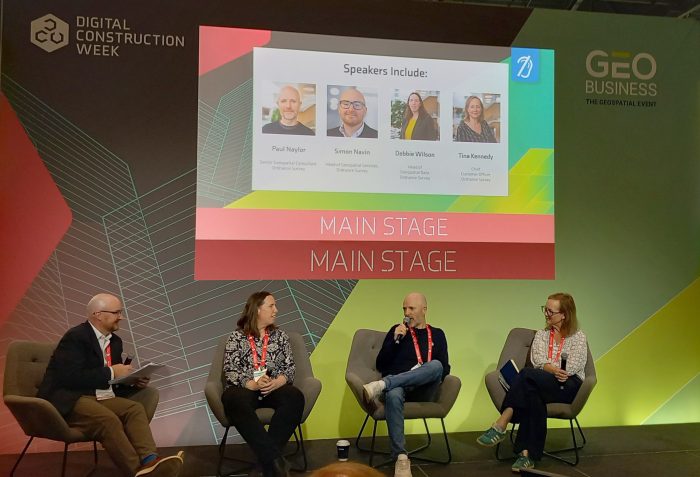
This challenge was reflected in comments from Debbie Wilson, Head of Geospatial Data at Ordnance Survey, who posed the question: “Who is the consumer of GIS data, human or machine?” As AI increasingly becomes a consumer of geospatial data, the quality and structure of that data become even more important. As Dennis Bauszus of the OSGeo community put it, AI does not fix messy and unstructured data. If anything, it increases the need for well-managed, trustworthy datasets.
Fighting Digital Decay: Keeping Data Alive
 Andrey Popov/stock.adobe.com
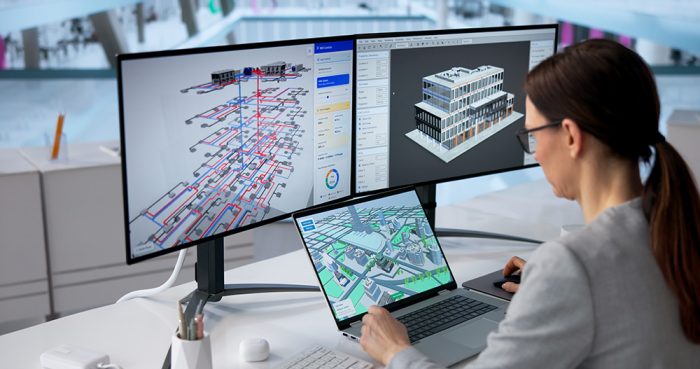
The last few years have seen the rise of the digital twin. A key message from both the Built Environment stage and BIM-related presentations on the main stage was the importance of keeping these models up to date and operational.
This is not a new challenge for GIS, but it is becoming more visible as organisations attempt to scale into large, complex 3D environments. Many are still working with static deliverables rather than continuously maintained operational datasets, often compounded by siloed or poorly integrated BIM and GIS data.
The result is a growing risk of digital decay, where models lose accuracy and value over time if they are not actively maintained and embedded into day-to-day workflows.
The Robots Still Need Adult Supervision
 funfunphoto/stock.adobe.com
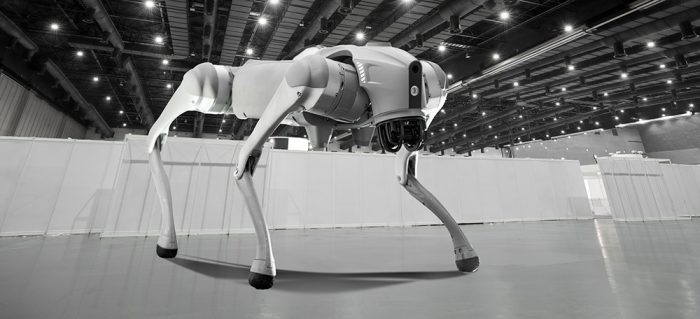
There were several robot dogs and a humanoid robot on display. Most of the time they were stationary, or in the case of the dogs, simply lying down. The humanoid robot eventually came to life and danced along to a jazz trio. It was an impressive performance, but it continued moving even after the music stopped. It was a light-hearted reminder that, for all the talk of advanced AI, these systems are still carefully programmed demonstrations rather than independent, self-aware intelligence.
Comments are closed here.